Speech Delay vs. Autism: How to Tell the Difference
Learn the key differences between a simple speech delay and autism spectrum disorder, including what signs to watch for and when to seek professional evaluation.
Dr. Sarah Chen
Lead Pediatric SLP
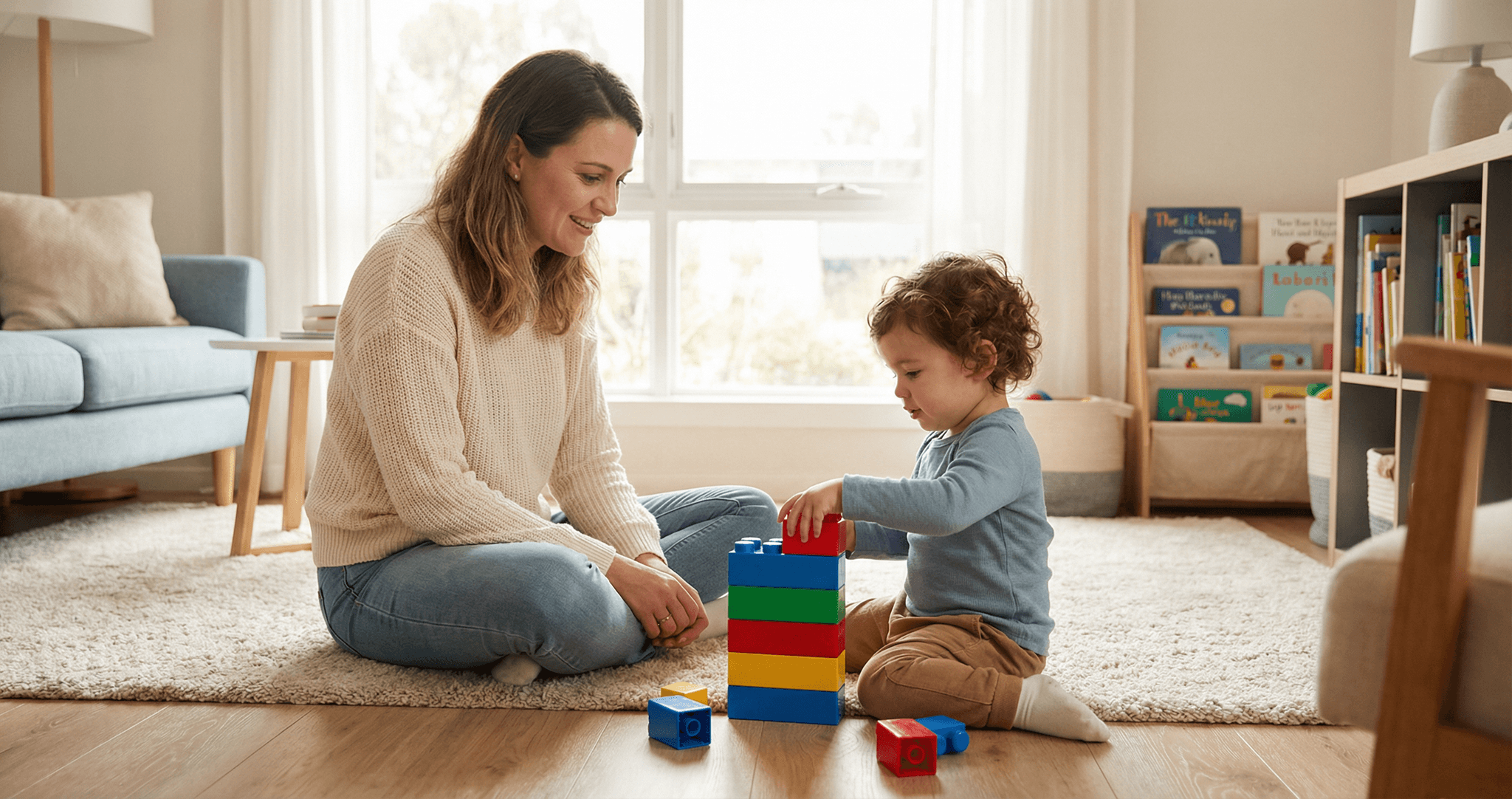
As a parent, few things cause more anxiety than wondering if your child's development is on track. When your toddler isn't talking as much as other children their age, it's natural to worry—and in today's information age, a quick internet search can lead you down a rabbit hole of concerns about autism spectrum disorder (ASD). But here's what every parent needs to know: while speech delays are common in children with autism, a speech delay alone does not mean your child has autism.
At Horizon Speech Therapy, we work with hundreds of families each year who come to us with this exact concern. In this comprehensive guide, we'll help you understand the key differences between a simple speech delay and autism, what signs to watch for, and most importantly, when and how to seek professional evaluation.
Understanding Speech Delays: What's Normal and What's Not
First, let's establish what typical speech development looks like. While every child develops at their own pace, there are general milestones that most children reach within certain age ranges:
- By 12 months: Says 'mama' or 'dada' with meaning, responds to their name, uses gestures like pointing and waving
- By 18 months: Has a vocabulary of at least 10-20 words, can follow simple one-step directions
- By 24 months: Uses 50+ words, combines two words together ('more milk,' 'daddy go'), strangers can understand about 50-70% of their speech
- By 36 months: Uses 3-5 word sentences, asks questions, strangers can understand 80-90% of their speech
A speech delay occurs when a child isn't meeting these milestones but is otherwise developing typically in other areas. Many children who are 'late talkers' catch up to their peers by age 3-4, especially with early intervention. In fact, research shows that approximately 15-25% of young children have some form of speech or language delay.
Key Differences: Speech Delay vs. Autism
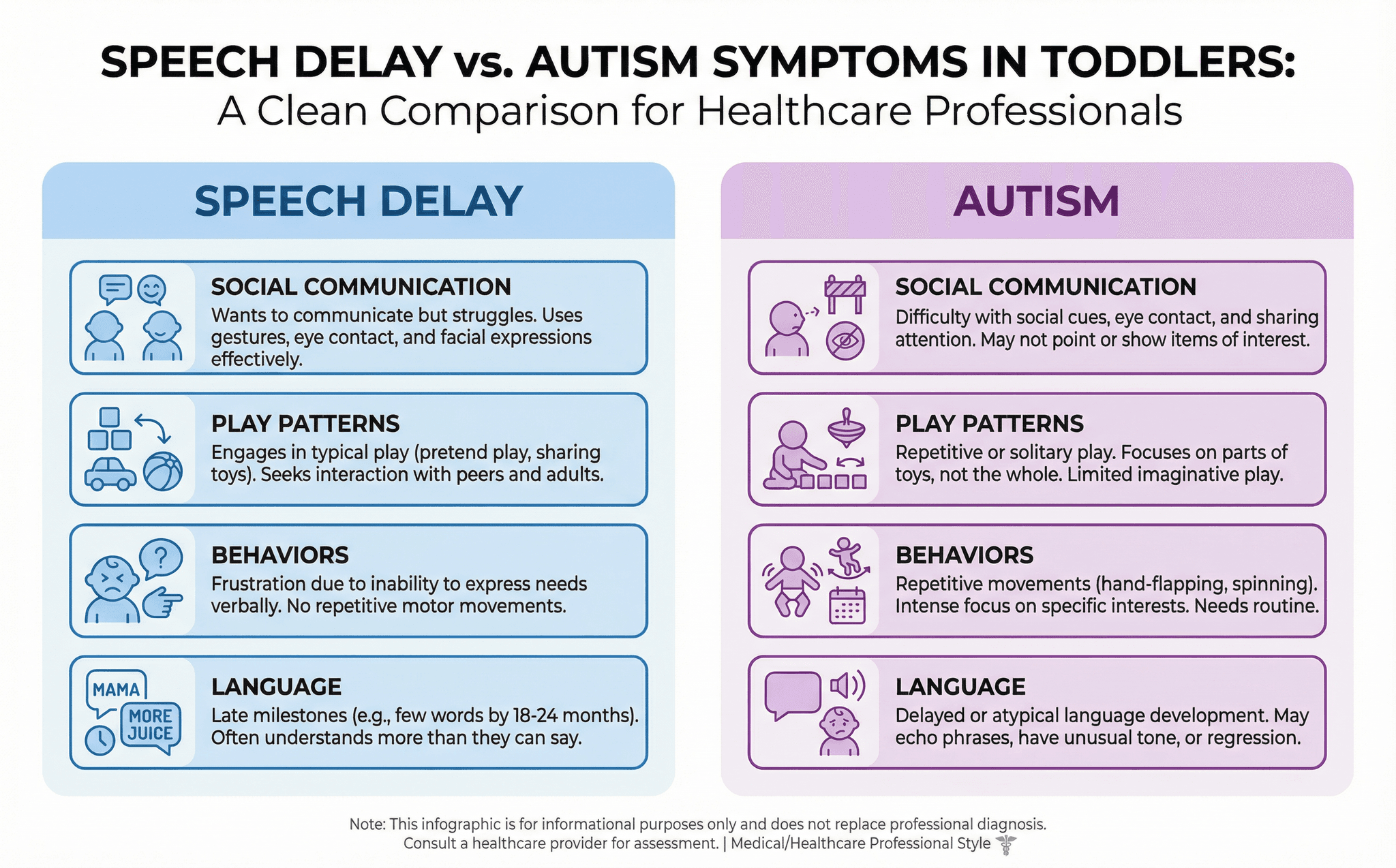
While both speech delays and autism can affect communication, they differ significantly in several important ways. Understanding these differences can help you determine whether your concerns warrant a comprehensive developmental evaluation.
Social Communication and Connection
This is perhaps the most significant differentiator. Children with simple speech delays typically have strong social communication skills—they just have trouble expressing themselves verbally. They make eye contact, respond to their name, show things to caregivers, and clearly want to connect with others. They might use gestures, facial expressions, or sounds to communicate when words fail them.
Children with autism often show differences in social communication that go beyond verbal language. They may not respond consistently to their name, might not point at things to share interest (called 'joint attention'), may have difficulty with back-and-forth social interactions, and might seem more interested in objects than people.
Play Patterns and Interests
Children with speech delays typically engage in age-appropriate play. They enjoy pretend play (feeding a doll, driving toy cars), play cooperatively with others, and have varied interests. Their play is flexible and imaginative.
Children with autism may show differences in how they play. They might line up toys rather than play with them imaginatively, show intense focus on specific objects or parts of objects (like spinning wheels), prefer to play alone, or engage in repetitive play patterns. They may also have very focused, intense interests in specific topics.
Behaviors and Sensory Responses
Children with simple speech delays don't typically show unusual behaviors or sensory sensitivities. Children with autism may engage in repetitive movements (hand flapping, rocking, spinning), have strong reactions to sensory input (sounds, textures, lights), prefer strict routines, or become very upset by small changes in their environment.
Warning Signs That May Indicate Autism
While only a qualified professional can diagnose autism, the following signs in combination with speech delays may warrant a comprehensive evaluation:
- Limited or no eye contact during interactions
- Doesn't respond to name by 12 months
- Doesn't point at objects to show interest by 14 months
- Doesn't engage in pretend play by 18 months
- Loss of previously acquired speech or social skills at any age
- Repeating words or phrases without communicative purpose (echolalia)
- Unusual tone of voice or speaking patterns
- Difficulty understanding or expressing emotions
- Repetitive movements or behaviors
- Extreme reactions to sensory input
- Rigid adherence to routines
Important: The presence of one or two of these signs doesn't mean your child has autism. These indicators are most significant when multiple signs appear together and when they impact your child's daily functioning.
What to Do If You're Concerned
If you have concerns about your child's development, the most important step is to seek professional evaluation. Early intervention—whether for speech delay or autism—leads to significantly better outcomes. Here's what we recommend:
1. Talk to Your Pediatrician
Your child's doctor can conduct developmental screenings and refer you to specialists if needed. Don't wait for your next scheduled appointment if you have concerns—call and request a developmental check.
2. Get a Speech-Language Evaluation
A speech-language pathologist (SLP) can assess your child's communication skills comprehensively. At Horizon Speech Therapy, our evaluations look at not just what words your child uses, but how they communicate overall—including gestures, social communication, and understanding of language.
3. Consider a Developmental Evaluation
If autism is a concern, a comprehensive developmental evaluation by a psychologist or developmental pediatrician can provide clarity. This evaluation looks at all areas of development and can provide a diagnosis if appropriate.
The Importance of Early Intervention
Regardless of whether your child has a speech delay, autism, or both, early intervention is key. Research consistently shows that children who receive therapy early—ideally before age 3—make significantly greater progress than those who start later.
For children with speech delays, therapy can help them catch up to peers and develop strong communication skills. For children with autism, early intensive intervention can help develop communication, social skills, and adaptive behaviors that significantly improve long-term outcomes.
"The brain is most adaptable in the first few years of life. Early intervention takes advantage of this plasticity, making it the most effective time to address developmental differences."
Frequently Asked Questions
Q:Can a child have both a speech delay and autism?
A: Yes, many children with autism also have speech delays. In fact, speech and language difficulties are one of the core features of autism. However, not all children with speech delays have autism—the key is looking at the whole picture of development.
Q:My child was a late talker but is talking now. Should I still be concerned about autism?
A: If your child is now communicating well, engaging socially, and showing typical development in other areas, there's likely no cause for concern. However, if you notice ongoing differences in social communication or behavior, it's worth discussing with your pediatrician.
Q:At what age can autism be diagnosed?
A: Autism can be reliably diagnosed as early as 18-24 months by experienced professionals, though many children aren't diagnosed until age 3-4. If you have concerns, don't wait—early evaluation and intervention are beneficial regardless of the eventual diagnosis.
Next Steps
If you're concerned about your child's speech development, we're here to help. At Horizon Speech Therapy, we offer comprehensive evaluations that look at all aspects of your child's communication—not just their words. Our experienced team can help determine whether your child would benefit from speech therapy and can provide guidance on next steps if further evaluation is recommended.
Ready to get answers? Book a free consultation with one of our pediatric speech-language pathologists. We'll listen to your concerns, answer your questions, and help you determine the best path forward for your child.
Need Help With Your Communication Goals?
Our team of experienced speech-language pathologists is here to help. Book a free consultation to discuss your needs.
Book Free ConsultationWritten by
Dr. Sarah Chen
Lead Pediatric SLP
Dr. Sarah Chen is a licensed speech-language pathologist at Horizon Speech Therapy, passionate about helping clients achieve their communication goals.