Bilingual Children and Speech Development: Myths vs. Facts
Separating fact from fiction about raising bilingual children, including what research really says about language development in multilingual homes.
Dr. Sarah Chen
Lead Pediatric SLP
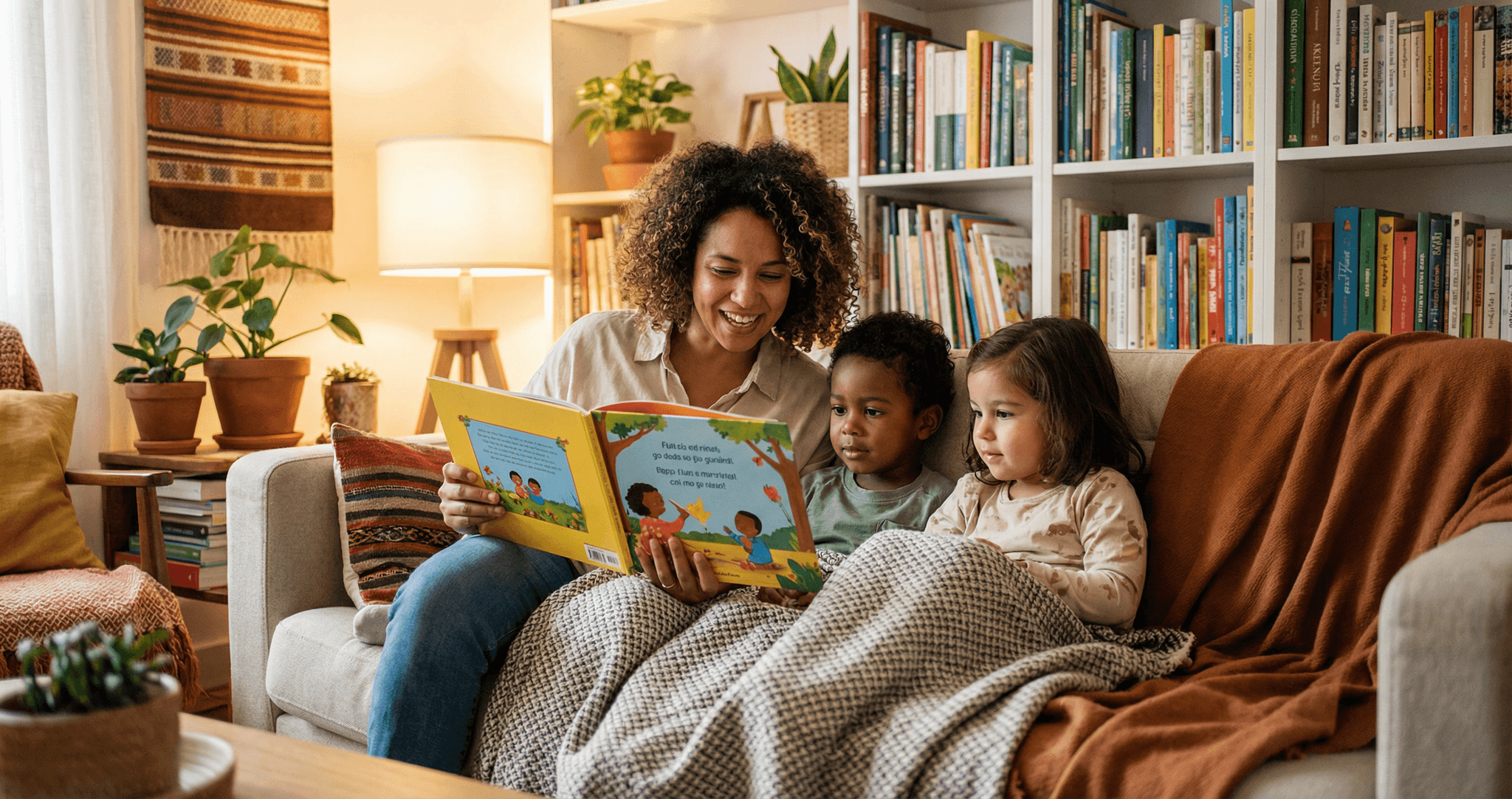
If you're raising your child with two or more languages, you've probably received well-meaning but conflicting advice. Maybe your pediatrician suggested speaking only English at home. Perhaps a family member warned that two languages will 'confuse' your child. Or you've worried that your bilingual toddler's smaller English vocabulary means they're falling behind.
As speech-language pathologists working with multilingual families across Greater Vancouver, we hear these concerns regularly. The good news? Decades of research overwhelmingly support bilingualism, and many of the common worries parents have are based on myths, not facts. Let's separate truth from fiction.
Myth #1: Bilingualism Causes Speech and Language Delays
This is perhaps the most persistent myth—and it's completely false. Extensive research consistently shows that learning two languages does not cause language delays. Children raised bilingually reach language milestones at the same rate as monolingual children.
Where does this myth come from? Part of the confusion arises because when we measure bilingual children's vocabulary in just one language, it may appear smaller than a monolingual child's. However, when we count their total vocabulary across both languages—which is the appropriate measure—bilingual children know just as many words, often more.
"Research shows that bilingual children's combined vocabulary across both languages equals or exceeds that of monolingual peers. The brain has unlimited capacity for language learning."
Unfortunately, despite clear scientific evidence, studies show that nearly half of professionals still incorrectly believe bilingualism causes or worsens speech delays. This leads to harmful recommendations that families abandon their home language—advice that is not supported by research.
Fact: Bilingual children may have speech or language delays, but bilingualism is never the cause. They experience delays at the same rate as monolingual children.
Myth #2: Two Languages Confuse Children
The idea that children get 'confused' by multiple languages significantly underestimates young brains. From birth, babies can distinguish between different languages. By 6 months, they can tell their two languages apart based on rhythm and sound patterns alone.
What about when children mix languages in the same sentence? This is called 'code-switching' or 'code-mixing,' and it's not a sign of confusion—it's actually a sign of linguistic sophistication. Bilingual children (and adults) mix languages intentionally and systematically, following grammatical rules from both languages. They do this more with other bilinguals and less with monolinguals, showing they're keenly aware of who speaks which language.
Myth #3: Children Should Master One Language Before Learning Another
Some parents are advised to wait until their child has 'mastered' English before introducing a second language. This advice is not supported by research and can actually harm children's ability to become fully bilingual.
The truth is that early childhood is the optimal time for language learning. Young children's brains are uniquely equipped to absorb multiple languages simultaneously. Children who learn languages from birth typically achieve native-like proficiency in both, while those who start later often have more difficulty with pronunciation and grammar.
- Birth to 3 years: The brain is most receptive to language learning
- The 'sensitive period' for language acquisition continues until puberty
- Starting early doesn't delay development in either language
- Children who wait may never achieve the same level of fluency
Myth #4: Parents Should Only Speak English to Help Their Child Succeed
This well-intentioned but misguided advice can actually harm children's language development and family relationships. Here's why speaking your native language matters:
Quality of Language Input
Children learn language best from rich, natural, emotionally engaged communication. Parents are most fluent, expressive, and comfortable in their native language. Speaking a second language in which you're less proficient actually provides lower-quality language input.
Family and Cultural Connection
Language is central to culture, identity, and family relationships. Children need their home language to communicate with grandparents, extended family, and their cultural community. Losing this connection can affect emotional wellbeing and sense of identity.
Cognitive Benefits
Bilingualism provides cognitive benefits including enhanced executive function, mental flexibility, and even delayed onset of dementia symptoms in older adults. These benefits are strongest when both languages are well-developed.
Our recommendation: Parents should speak whichever language they're most comfortable with. Rich, natural communication in any language is more valuable than simplified communication in a second language.
Myth #5: Children with Developmental Delays Should Only Learn One Language
Parents of children with autism, Down syndrome, or other developmental differences are often told to drop the home language and focus only on English. Research does not support this advice.
Studies show that children with developmental disabilities can successfully become bilingual without additional language challenges. In fact, maintaining the home language is important for these children's social-emotional development and family connection. There is no evidence that bilingualism worsens outcomes for children with any developmental condition.
What Research Actually Shows About Bilingualism
Here's what decades of research tell us about raising bilingual children:
- Bilingual children reach language milestones at the same time as monolingual children
- The brain has unlimited capacity for language learning—there's no 'crowding out'
- Code-switching is normal, systematic, and shows linguistic competence
- Early bilingualism leads to native-like proficiency in both languages
- Maintaining the home language supports, rather than harms, English development
- Bilingualism provides cognitive, social, and economic benefits
- All children, including those with disabilities, can become bilingual
Best Practices for Raising Bilingual Children
If you're committed to raising your child bilingually, here are evidence-based strategies for success:
Provide Consistent, Rich Exposure
Children need substantial exposure to each language to become proficient—ideally at least 20-25% of their waking time in each language. The more exposure, the stronger the language development.
Choose a Strategy That Works for Your Family
- One Parent, One Language (OPOL): Each parent consistently speaks one language. Research shows this approach can lead to 30-40% better outcomes than inconsistent mixing.
- Minority Language at Home: The less-common language is used at home, while the majority language is learned in the community.
- Time-based: Different languages at different times (weekdays vs. weekends, mornings vs. evenings).
Support the Minority Language
The community language (often English in Canada) will develop naturally through school and social exposure. The home language needs more intentional support through family time, media, books, cultural activities, and connections with speakers of that language.
When to Seek Help
While bilingualism doesn't cause delays, bilingual children can still have speech or language disorders just like monolingual children. Seek evaluation if:
- Your child isn't meeting language milestones in either language
- There's a significant gap between understanding and speaking
- You notice regression or loss of language skills
- Your child is frustrated by their inability to communicate
- Teachers or caregivers express concerns
Importantly, evaluation should assess both languages whenever possible. English-only assessments can underestimate bilingual children's abilities by 25-40%, potentially leading to inappropriate diagnoses or recommendations.
At Horizon Speech Therapy, we have clinicians who speak multiple languages and understand the unique considerations for bilingual families. We assess children's abilities across languages and never recommend abandoning a home language.
The Bottom Line
Raising bilingual children is a gift that provides lifelong benefits—cognitively, socially, culturally, and economically. Don't let myths and misinformation discourage you from giving your child the gift of multiple languages. The research is clear: bilingualism is beneficial, not harmful, for children's development.
If you have concerns about your bilingual child's speech or language development, we're here to help with culturally informed, evidence-based assessment and support.
Need Help With Your Communication Goals?
Our team of experienced speech-language pathologists is here to help. Book a free consultation to discuss your needs.
Book Free ConsultationWritten by
Dr. Sarah Chen
Lead Pediatric SLP
Dr. Sarah Chen is a licensed speech-language pathologist at Horizon Speech Therapy, passionate about helping clients achieve their communication goals.