Sign Language Therapy
Unlock communication through the power of sign language
Our sign language therapy program teaches ASL and LSQ as functional communication tools for non-verbal or hearing-impaired individuals, empowering them to express themselves fully.
At a Glance
Session Length
30-45 minutes
Typical Duration
Ongoing, progress-based
Availability
In-Person & Virtual
For
About
Sign Language Therapy
For individuals who are non-verbal, hearing-impaired, or have developmental conditions that affect spoken language, sign language opens a vital communication pathway. At Horizon Speech Therapy, our sign language program teaches American Sign Language (ASL) and Langue des signes québécoise (LSQ) within a therapeutic framework designed to meet each client's unique needs. We go beyond vocabulary drills—our therapists integrate sign language into meaningful interactions, helping clients build genuine conversational skills, express emotions, make choices, and participate actively in their daily lives.
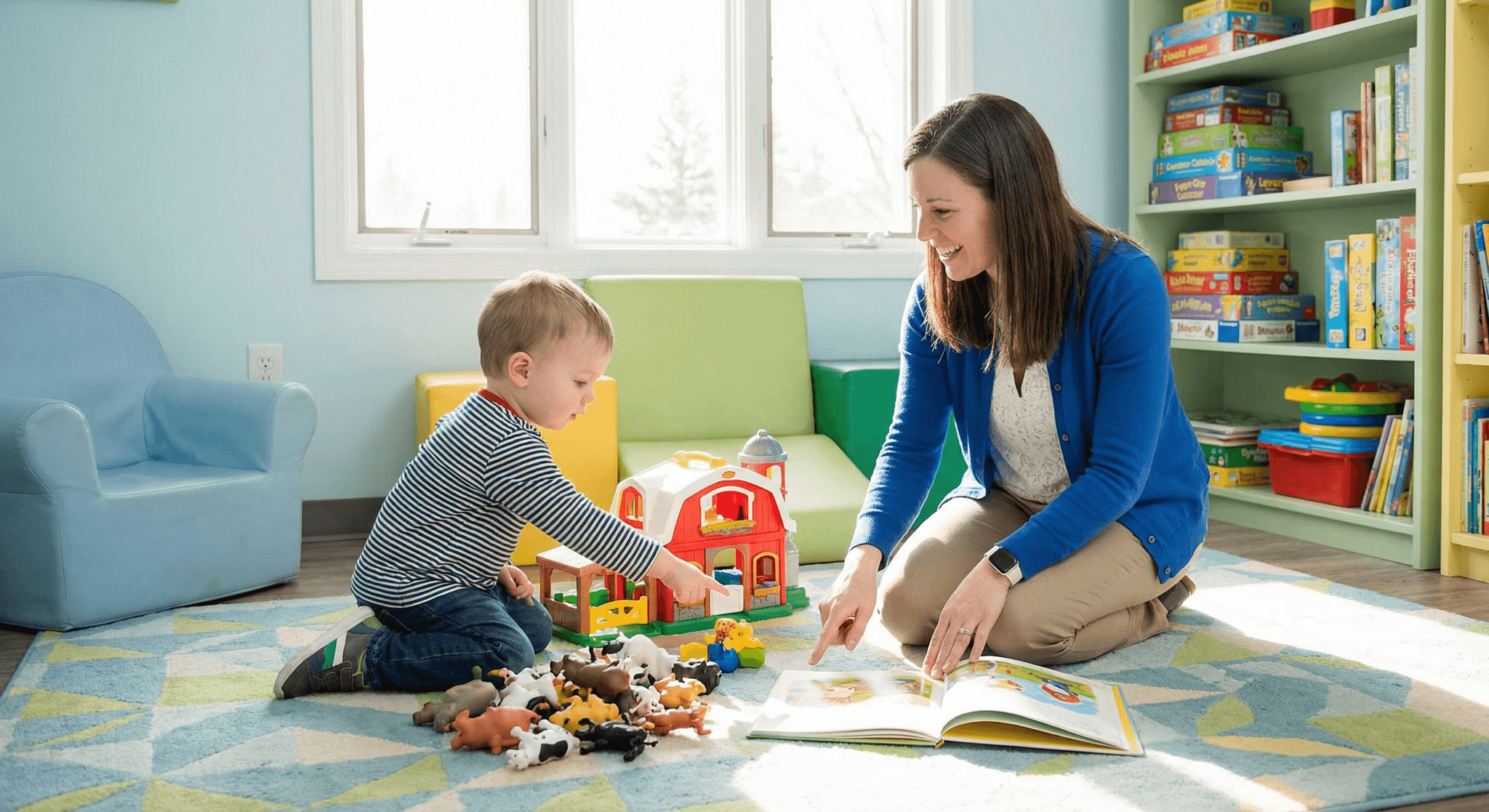
We also place strong emphasis on training caregivers, family members, and educators alongside the client. Communication is a two-way process, and ensuring that the people in a client's life can sign creates a truly supportive environment. Whether sign language serves as a primary mode of communication or a bridge to spoken language, our therapists use a total communication philosophy that values every form of expression. Sessions are engaging, visual, and tailored to developmental level—from first signs with toddlers to complex conversational ASL for older children and adults.
What We Treat
Conditions
Methods
Treatment Approaches
ASL/LSQ Instruction
Structured teaching of American Sign Language or Langue des signes québécoise tailored to the client's communication level and goals.
Total Communication Approach
Combining sign language, speech, gestures, and visual supports to maximize understanding and expression across all contexts.
Sign-Supported Speech
Pairing key signs with spoken words to reinforce language development and bridge the gap between sign and verbal communication.
Visual Communication Systems
Integrating picture boards, visual schedules, and sign dictionaries to support learning and generalization of sign vocabulary.
Process
How It Works
Communication Assessment
Evaluate current communication abilities, preferred modalities, and identify functional communication goals.
Individualized Sign Plan
Select priority vocabulary and develop a structured sign language curriculum based on the client's daily needs.
Interactive Sessions
Teach signs through play, routines, and meaningful activities that encourage spontaneous use.
Caregiver Training
Coach family members and caregivers in sign language so communication continues seamlessly at home and school.
Generalization & Growth
Expand vocabulary, introduce sign combinations and sentences, and ensure skills transfer to all environments.
Results
Expected Outcomes
FAQ
Common Questions
Will learning sign language prevent my child from speaking?
Research consistently shows that sign language actually supports and often accelerates spoken language development. Many children use signs as a bridge to verbal communication, dropping signs naturally as their speech improves. Sign language reduces frustration and gives children a way to communicate while their speech skills catch up.
Do I need to learn sign language too?
Yes, and we make it easy! We provide caregiver training as part of every session so you can learn alongside your child. You don't need to become fluent—learning key functional signs creates a shared communication system that dramatically improves daily interactions and reduces frustration for everyone.
Ready to Start?
Book your free 15-minute consultation to discuss your needs.