15 Fun Speech Therapy Activities You Can Do at Home
Simple, engaging activities parents can use to support their child's speech and language development between therapy sessions—no special materials required.
Jennifer Park
Pediatric SLP
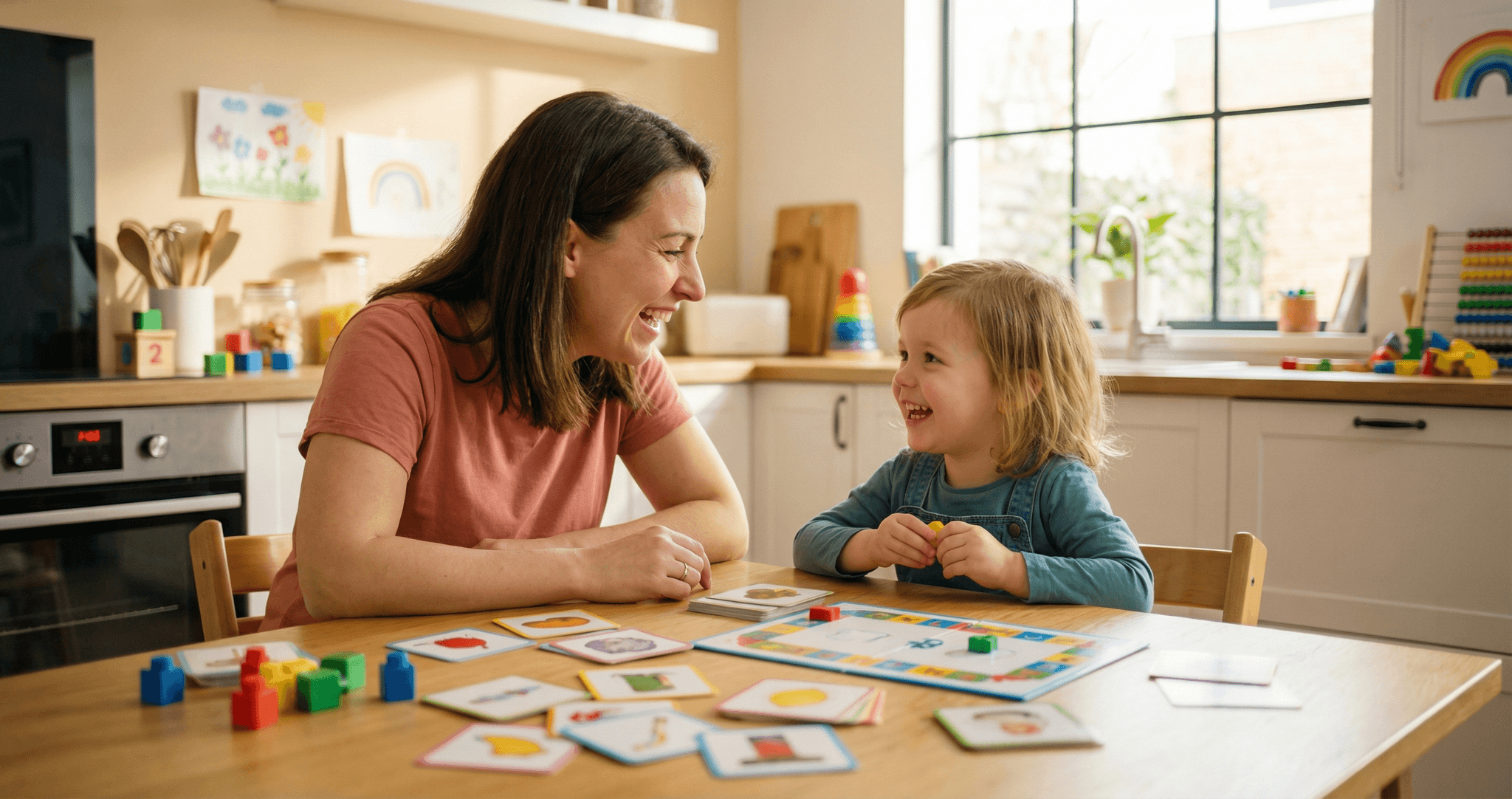
One of the most common questions we hear from parents is: 'What can I do at home to help my child?' The good news is that speech and language practice doesn't require expensive toys, flashcards, or complicated activities. The most effective practice happens naturally, through everyday interactions and play.
In this guide, we're sharing 15 of our favorite speech therapy activities that you can do at home with minimal preparation. These activities are designed to be fun—because children learn best when they're engaged and enjoying themselves. We've organized them by age group, but many can be adapted for different developmental levels.
The key to effective home practice is consistency, not duration. Even 10-15 minutes of focused interaction daily makes a significant difference. Choose activities your child enjoys, and stop before they lose interest.
Activities for Babies and Young Toddlers (0-2 Years)
For our youngest learners, the focus is on building the foundations of communication—attention, turn-taking, and understanding that sounds have meaning.
1. Narrate Your Day
Talk to your baby or toddler about everything you're doing together. During diaper changes: 'Let's change your diaper. Up, up, up! Now we need a clean diaper. Nice and dry!' During meals: 'Time for breakfast! Here's your banana. Yummy banana. You're eating the banana!'
This 'self-talk' and 'parallel talk' exposes children to thousands of words in meaningful contexts. Use simple sentences, speak expressively, and repeat key words often.
2. Copy Cat Games
When your baby makes a sound, copy it back to them. If they say 'babababa,' you say 'babababa!' Then wait and see if they respond. This teaches turn-taking—the foundation of conversation—and shows your baby that their sounds matter.
As they get older, add variations. If they say 'ba,' you can say 'ba-ba-ba!' or change it slightly to 'ba-ba-bee!' This encourages vocal play and experimentation.
3. Peek-a-Boo and Anticipation Games
Classic games like peek-a-boo build joint attention (sharing focus on the same thing) and anticipation—both important for communication. Other anticipation games include:
- 'Round and Round the Garden' (tickle game)
- 'This Little Piggy'
- Blowing raspberries on tummy
- Stacking blocks and saying '1, 2, 3... CRASH!'
The predictable pattern helps children anticipate what comes next, and the exciting ending keeps them engaged and asking for more.
4. Sound Effects Play
While playing with cars, animals, or other toys, add sound effects: 'The car goes VROOM VROOM!' 'The cow says MOOOO!' These fun sounds are often easier for young children to imitate than words, and they build the muscle movements needed for speech.
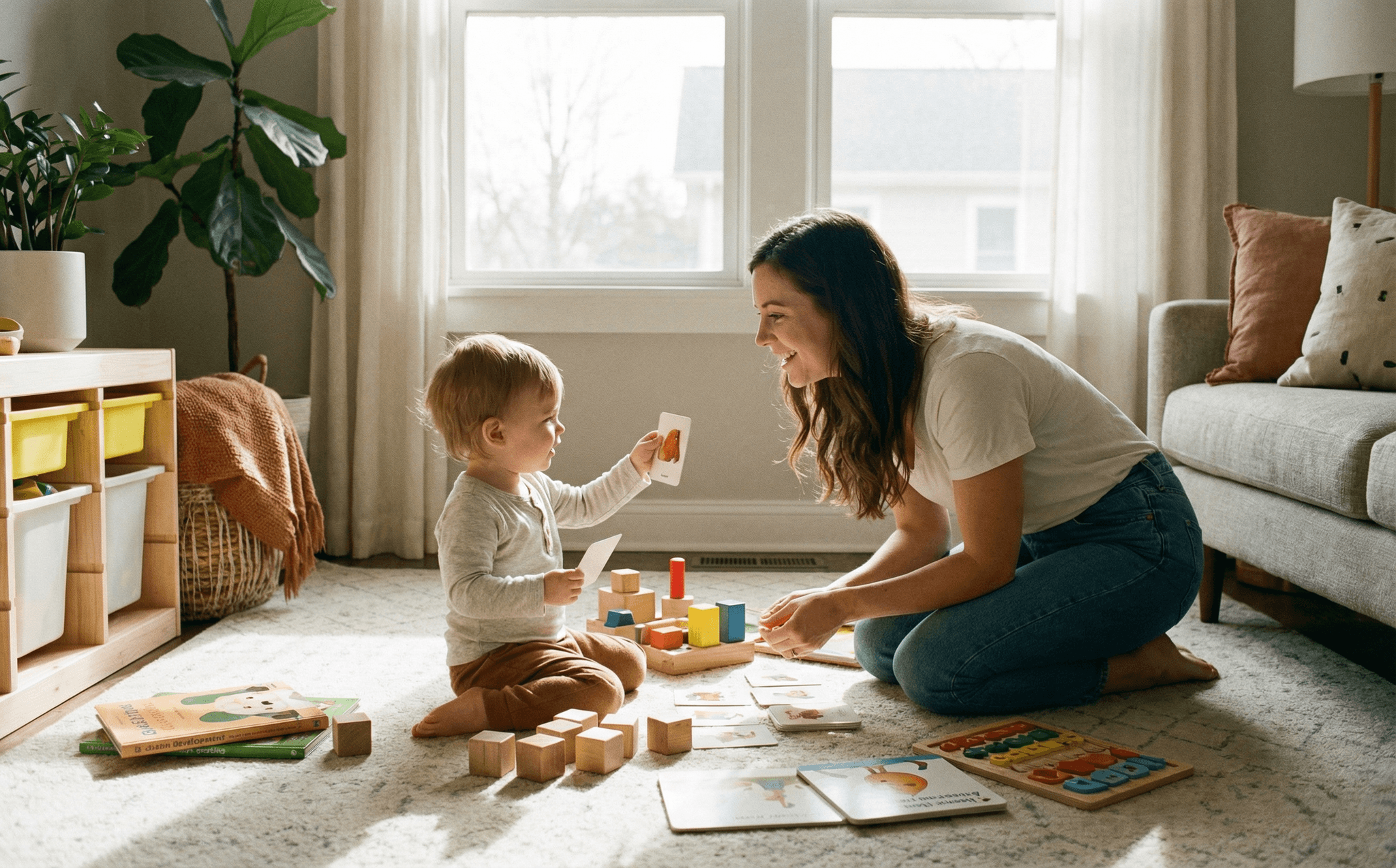
Activities for Toddlers (2-3 Years)
At this age, children are rapidly building vocabulary and beginning to combine words. Activities focus on expanding language and encouraging longer utterances.
5. Choice Time
Instead of guessing what your child wants, offer choices that require them to communicate. Hold up two snack options: 'Do you want crackers or banana?' Show two shirts: 'Red shirt or blue shirt?' This creates natural opportunities to practice words and makes them feel empowered.
If they point, model the word and wait to see if they'll imitate: 'Banana? You want banana?' Give them a few seconds before handing it over.
6. Expand and Extend
When your child says a word or short phrase, expand it by adding one or two words. This models more advanced language without directly correcting them:
- Child: 'Dog!' → Parent: 'Yes, a big dog!'
- Child: 'Mommy go' → Parent: 'Mommy is going to work.'
- Child: 'More' → Parent: 'You want more crackers?'
7. Bubbles
Bubbles are a speech therapist's secret weapon. They create natural opportunities to practice many skills:
- Requesting: Child must ask for 'more,' 'bubbles,' or 'blow'
- Oral motor skills: Child can practice blowing (great for mouth muscles)
- Turn-taking: 'My turn to blow, your turn to pop!'
- Vocabulary: big/small bubbles, pop, catch, up, down
Resist the urge to blow bubbles continuously. Blow a few, then wait. Create a need for your child to communicate to get more.
8. Book Time with a Twist
Reading together is wonderful, but you don't always have to read the words on the page. Try these variations:
- Point to pictures and ask 'What's this?' or 'What's the doggy doing?'
- Make predictions: 'What do you think will happen next?'
- Relate to their life: 'We have a red ball just like that!'
- Let them 'read' to you by telling the story from pictures
- For familiar books, pause and let them fill in words
Activities for Preschoolers (3-5 Years)
Preschoolers are developing more complex language skills—longer sentences, storytelling, and conversation. Activities can target specific sounds, expand vocabulary, and build narrative skills.
9. I Spy
This classic game is perfect for working on sounds and describing. If your child is working on the 'S' sound: 'I spy something that starts with SSSS...' You can also use describing words: 'I spy something that is red and round.'
Let your child have turns giving clues too—this practices formulating descriptions and using target sounds in a fun way.
10. Silly Sentences
Create silly sentences together using target sounds or vocabulary words. 'The silly snake slid slowly.' 'The rabbit ran around the red rock.' Children love absurdity, and the sillier the sentence, the more memorable it becomes.
You can also play 'Fix My Sentence' where you purposely make grammatical errors for them to correct: 'The dog runned fast!' 'No, the dog RAN fast!'
11. Story Retelling
After reading a familiar book or watching a show together, ask your child to retell the story. This builds narrative skills—understanding that stories have a beginning, middle, and end, and can sequence events.
Use prompts if needed: 'Who was in the story?' 'What happened first?' 'Then what happened?' 'How did it end?' Visual supports like pictures from the book can help.
12. Would You Rather?
'Would you rather have a pet dinosaur or a pet dragon? Why?' This game encourages reasoning, explaining, and expressing preferences. It's perfect for car rides, waiting rooms, or dinner table conversation.
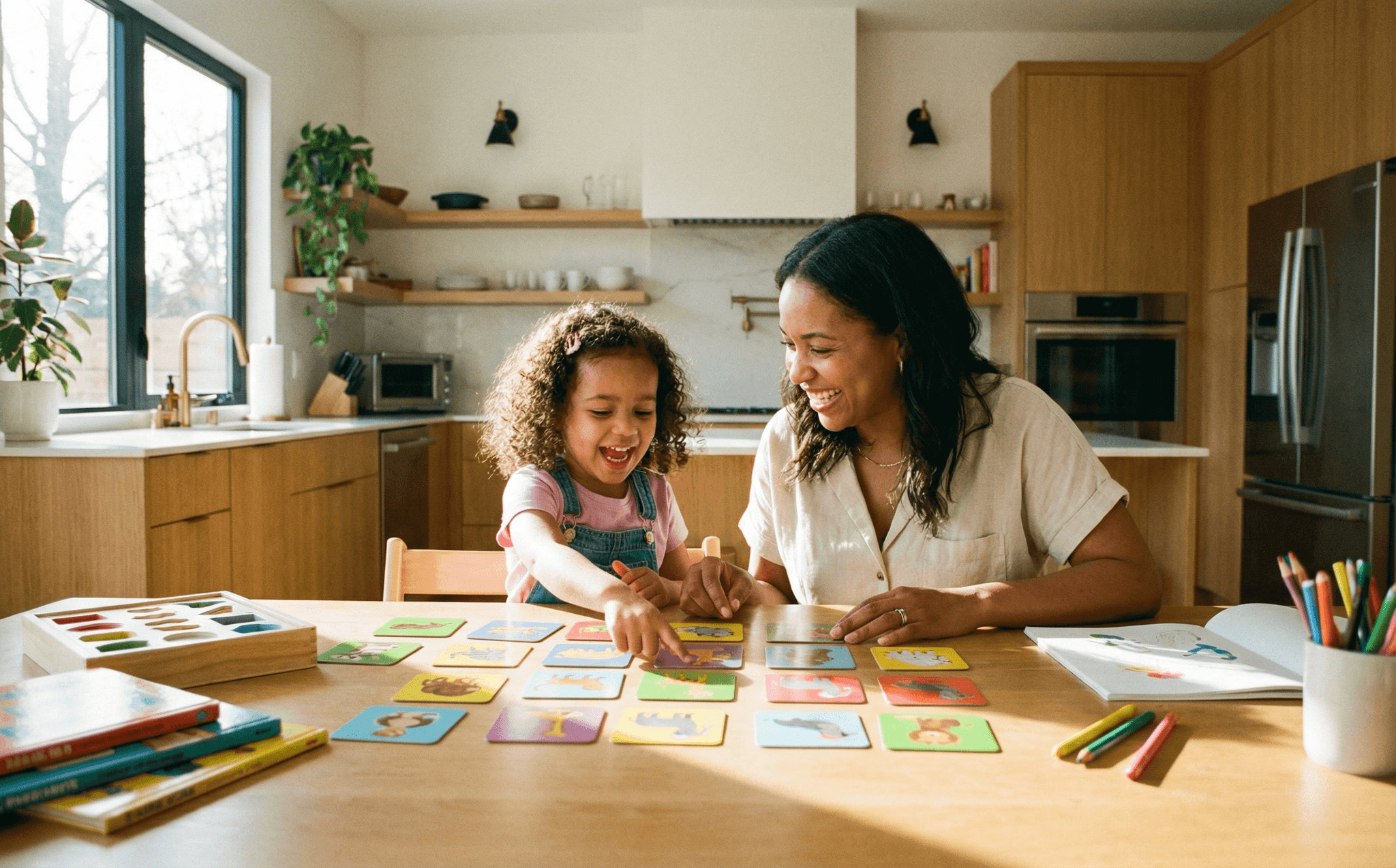
Activities for All Ages
13. Cooking Together
The kitchen is full of language opportunities! Following recipes practices sequencing ('First we crack the egg, then we mix'). Describing foods builds vocabulary (smooth, lumpy, sticky, crunchy). Plus, there's built-in motivation—they get to eat what they make!
- Name ingredients and actions
- Practice following multi-step directions
- Describe textures, smells, and tastes
- Compare and contrast (big spoon vs. little spoon)
- Sequence steps: first, next, then, finally
14. Singing Songs
Songs are fantastic for language learning because melody and rhythm make words easier to remember and produce. The repetition in children's songs provides practice without feeling like drill work.
Action songs like 'Wheels on the Bus,' 'Head, Shoulders, Knees, and Toes,' and 'If You're Happy and You Know It' add movement to support learning. Songs with fill-in-the-blank opportunities ('Old MacDonald had a farm, E-I-E-I-O, and on his farm he had a...') encourage participation.
15. Pretend Play
Imaginative play is one of the richest language environments. Whether playing house, doctor, restaurant, or superheroes, children practice conversation, use new vocabulary, and explore different social scenarios.
Join in their play and follow their lead. Add language by wondering aloud: 'I wonder if the baby is hungry?' Model new vocabulary: 'The patient needs a stethoscope for the doctor to hear their heart.' Ask questions that extend the play: 'What should we make for dinner?'
Tips for Successful Home Practice
- Keep it short and fun—stop before your child loses interest
- Follow your child's lead and interests
- Create opportunities for them to communicate, rather than doing things for them
- Model correct speech instead of directly correcting errors
- Celebrate effort, not just accuracy
- Be patient and give them time to respond
- Limit screen time and prioritize face-to-face interaction
- Make practice part of daily routines so it happens naturally
Remember: You don't need to be a speech therapist to help your child. The most powerful thing you can do is engage with them, talk with them, and show them that communication is valuable and enjoyable.
When to Seek Professional Help
While home activities are valuable, they're most effective when combined with professional guidance tailored to your child's specific needs. If you have concerns about your child's speech or language development, or if they're already in therapy and you want more personalized home activities, we're here to help.
At Horizon Speech Therapy, we work closely with families to develop home practice programs that fit your lifestyle and target your child's individual goals. Every child is different, and what works for one may not work for another—we can help you find the right approach for your family.
Need Help With Your Communication Goals?
Our team of experienced speech-language pathologists is here to help. Book a free consultation to discuss your needs.
Book Free ConsultationWritten by
Jennifer Park
Pediatric SLP
Jennifer Park is a licensed speech-language pathologist at Horizon Speech Therapy, passionate about helping clients achieve their communication goals.